In April 2025, members of the ONTOLOGY development team travelled to Los Amigos Biological Station (Madre de Dios, Peru) to demonstrate the alpha build of ONTOLOGY at a biodiversity monitoring workshop held at the station.
The team consisted of the Centre for Biodiversity Genomics’ (CBG) CEO, Dr. Paul Hebert, CBG Innovation Co-Lead & ONTOLOGY Molecular Biology lead Dr. Robin Floyd, and ONTOLOGY Project Manager Dr. Ken Thompson.
The team arrived at the station for a late lunch and enjoyed a wonderful meal of stuffed Rocoto peppers (Rocoto relleno) prepared by the kitchen staff. After eating and unpacking into accommodations, the team got to work setting up into the laboratory space and preparing for the work ahead.
Once dusk fell, the team got to work setting up two bright lights against the white exterior of two Los Amigos buildings and collected hundreds of insects.
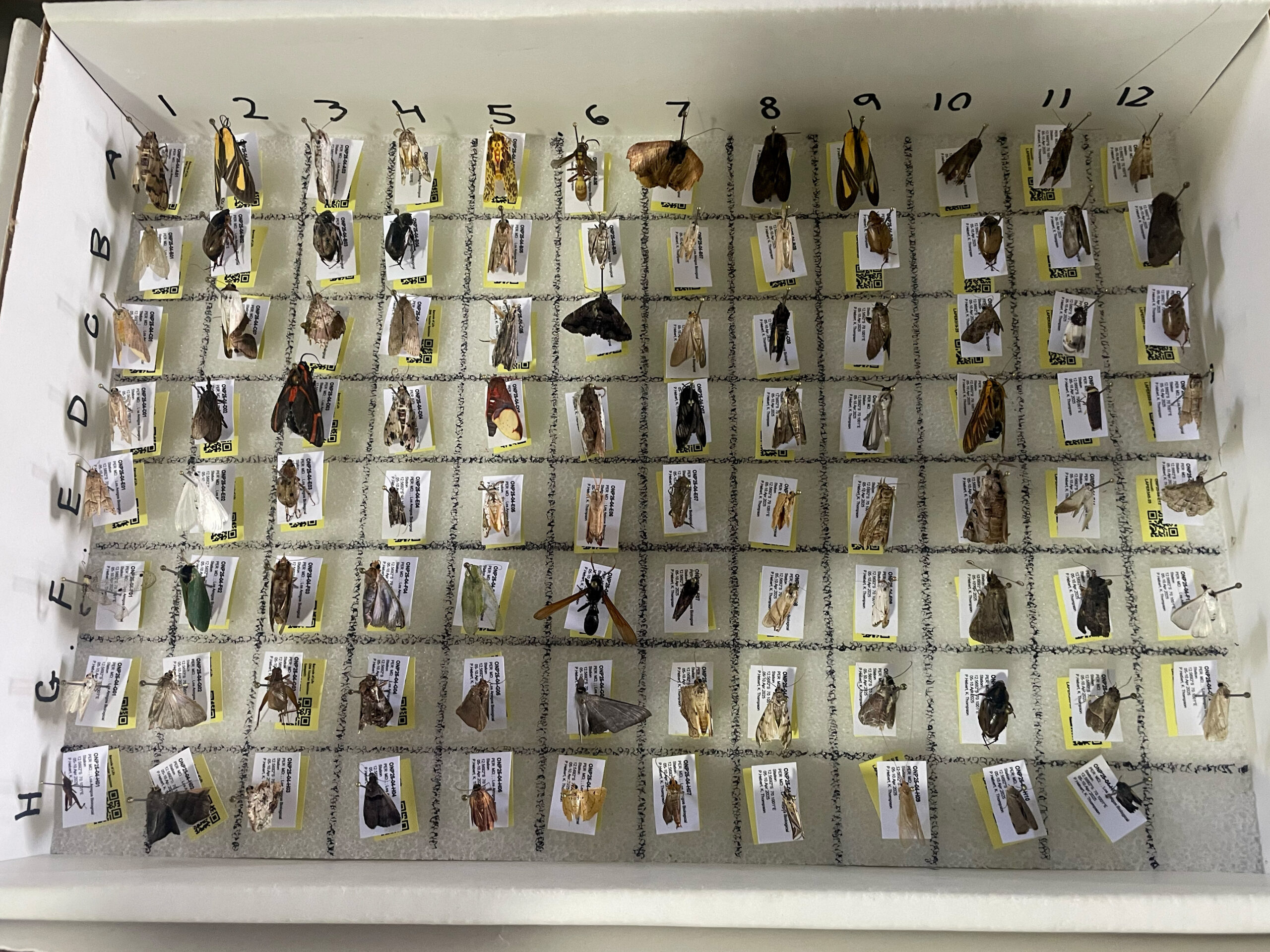
After collecting, insects were euthanized and pinned (nine sets of 95) or arrayed into the wells of a 96-well microplate (one plate). Pinned insects were photographed using an iPhone with an attached macro lens. Single legs were removed from specimens and placed into wells, and then DNA was extracted using the ONTOLOGY Alkaline Lysis protocol.
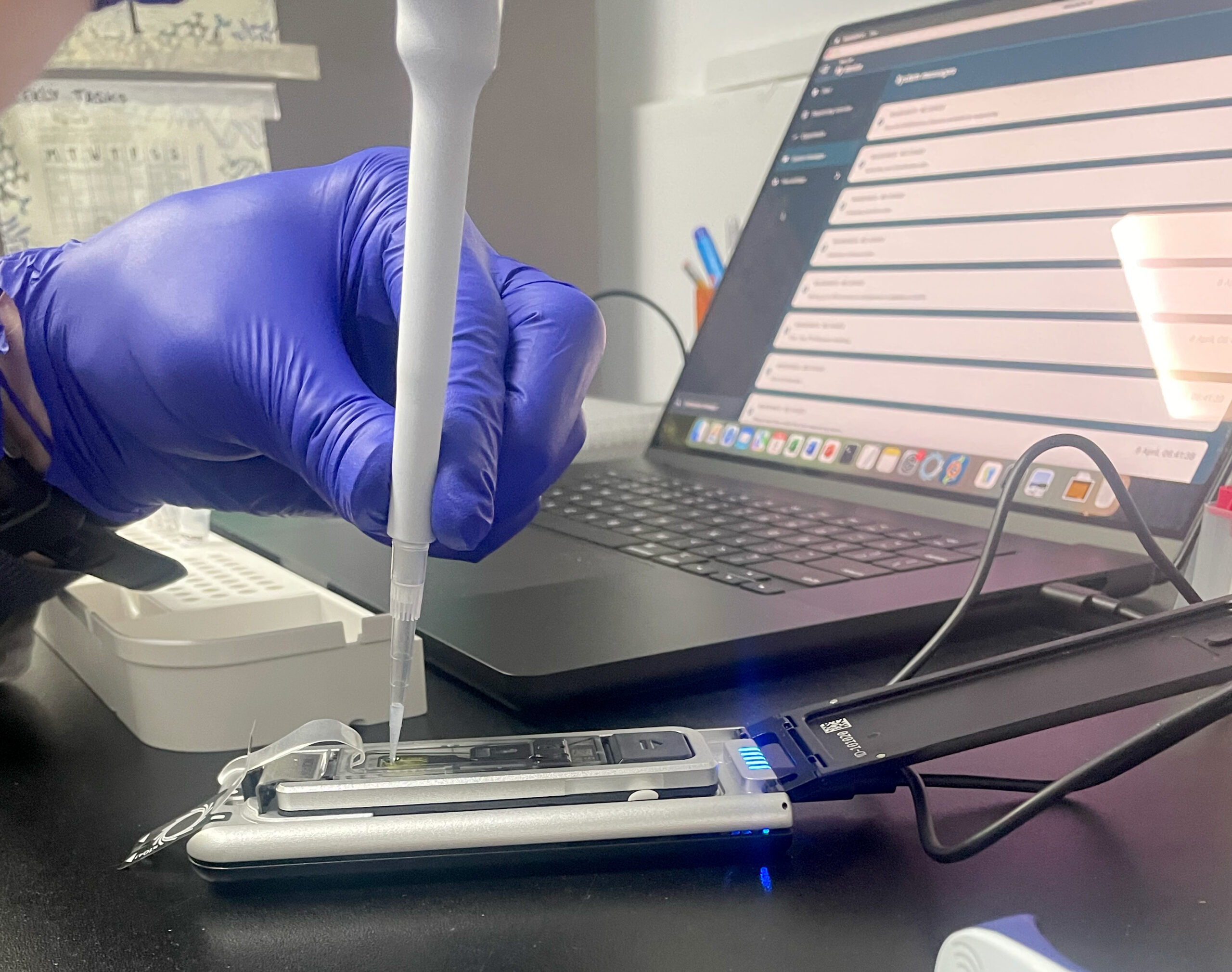
After extraction, DNA was pipetted into rehydrated ONTOLOGY PCR plates and then PCR-amplified. The team completed ONT’s library preparation protocol and sequenced all 950 specimens on a Flongle Flow cell using a MinION Mk-1d sequencer (Oxford Nanopore Technologies).
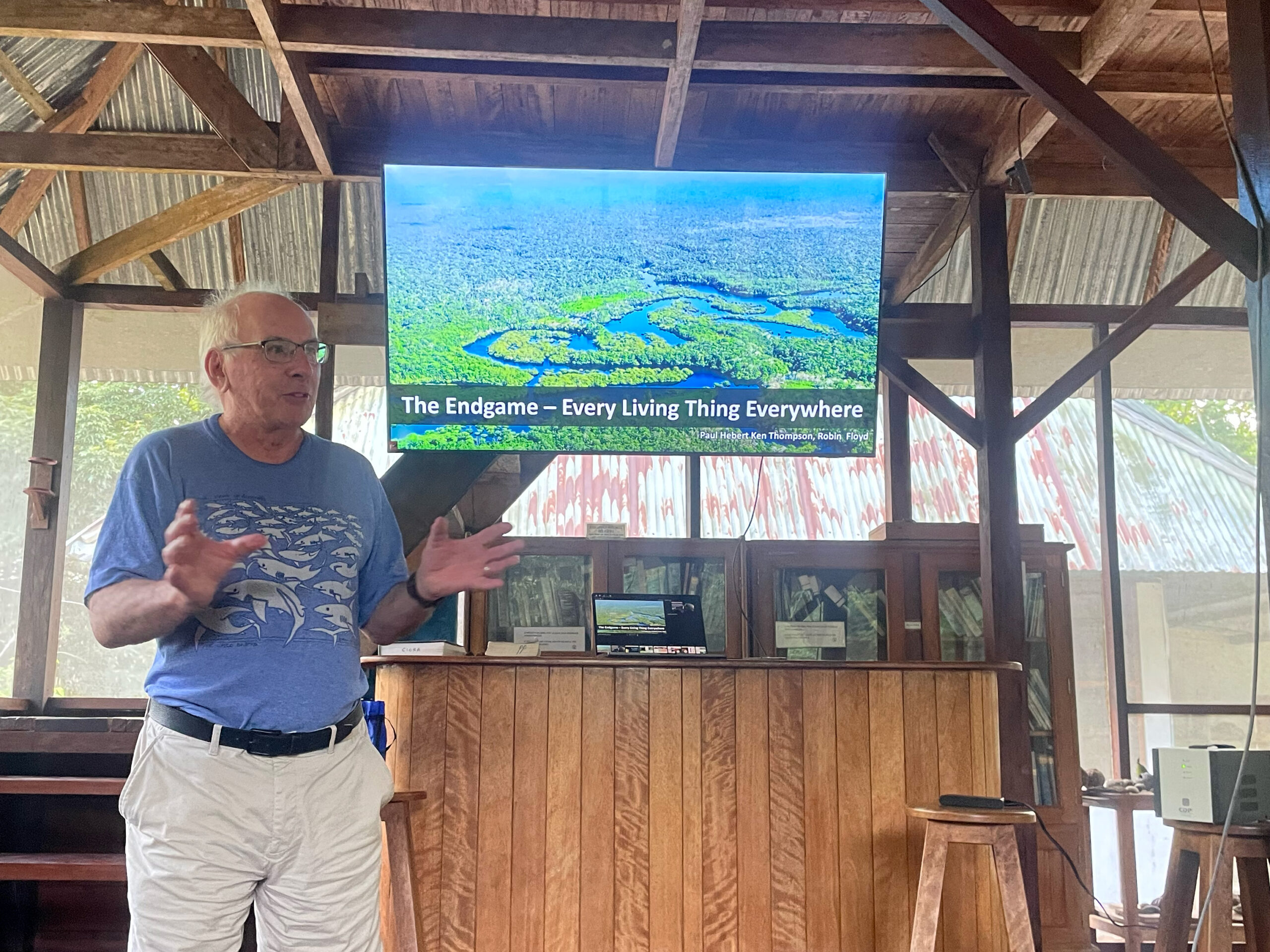
The results were analyzed using ONTOLOGY software on a MacBook Pro Laptop and bioinformatic analysis completed in 2 hours. Images and sequences were uploaded to BOLD and results were presented to workshop delegates by Dr. Hebert in the last session of the conference.
Within just 48 hours, the insects went from flying free in the wild to living forever on BOLD.